

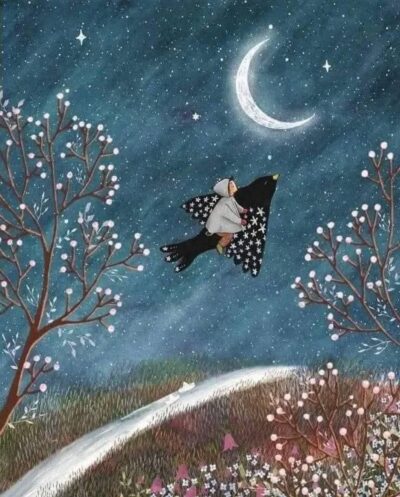
The Hero’s Journey Doesn’t End When We Grow Older
We often imagine the Hero’s Journey as the story of someone young. They leave the familiar behind, step into the unknown, encounter challenges, discover their strength, and eventually become someone they could not have imagined at the beginning.
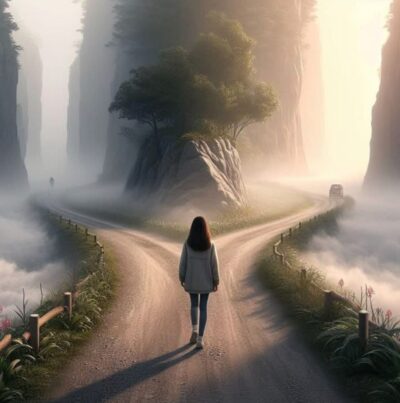
But what happens when the call comes later in life?
What happens when we have already built the career, raised the family, cared for others, survived disappointment, experienced loss, celebrated accomplishments, and spent decades becoming the person we thought we were supposed to be?
Sometimes another call arrives. And this one sounds very different.
A career ends ~
or simply stops feeling meaningful.
Children grow up and build lives of their own.
A marriage changes or ends.
Someone we love dies. Our health, responsibilities, friendships, or priorities shift. Or perhaps nothing dramatic happens at all. We simply wake up one morning and realize that a role or identity that once fit us beautifully no longer feels large enough for the person we have become.
That can be unsettling.
For much of our lives, identity is connected to what we do and who needs us.
We are someone’s parent, partner, employee, caregiver, leader, provider, problem-solver, or protector.
Those roles give our days structure and our lives meaning. And then life changes. Suddenly, the questions we once knew how to answer aren’t quite the right questions anymore.
The younger version of us may have asked:
What will I become?
What can I accomplish?
How will I prove myself?
But later in life, another question begins quietly asking for our attention:
How do I want to live the rest of my life?
That may be one of the most important calls to adventure we ever receive.
A Different Kind of Hero’s Journey
The second Hero’s Journey isn’t necessarily about conquering the world. It may be about releasing our need to conquer anything at all.
We have already spent years accumulating ~
responsibilities, possessions, achievements, expectations, relationships, experiences, and stories about who we are supposed to be.
The later journey often asks us to do something very different. It asks us to choose.
What still belongs in my life?
What am I carrying simply because I have always carried it?
What am I ready to put down?
What matters enough to receive the time I have left?
There is tremendous freedom in those questions. Not because the answers are always easy, but because for perhaps the first time, we can begin answering them without needing everyone else to approve.
We Are Allowed to Become Someone New
One of the quiet traps of growing older is believing that we must remain consistent with the person we have always been.
But why?
We give young people permission to change constantly.
We expect them to experiment, reconsider, discover new interests, abandon old dreams, make mistakes, and reinvent themselves.
Somewhere along the way, adulthood seems to come with an invisible instruction:
Now stay this person.
Yet life continues changing us. Experience changes us. Grief changes us. Love changes us.
Disappointment changes us. Wisdom changes us. And sometimes healing changes us most of all.
There is no rule saying that the person who carried us through one season of life must also carry us through the next. We are allowed to meet ourselves again.
The Courage to Want Something Different
Later-life transformation can require a surprising kind of courage.
When we are young, the unknown often feels exciting because so little has been decided.
Later, the familiar can become harder to leave.
We know what we might lose. We understand consequences. We have routines, histories, relationships, and identities built over decades. Beginning again at this stage isn’t naïve.
It is deeply intentional.
And beginning again doesn’t have to mean moving across the country, starting a company, climbing a mountain, or dramatically changing everything.
Sometimes the adventure is much quieter. Writing the book. Taking the trip. Learning something simply because it fascinates us. Creating something with no intention of making money from it. Spending more time outdoors. Making new friends. Returning to something we once loved. Saying no without explaining ourselves.
Allowing our days to become slower. Choosing peace over obligation.
Discovering what brings us joy now ~
not what brought us joy twenty years ago.
These may look like small choices from the outside. From the inside, they can represent an entirely new life.
Perhaps This Journey Is About Becoming More Ourselves
The first half of life often teaches us how to function in the world.
The later journey may teach us how to belong to ourselves. By then, we have collected enough experience to recognize what matters and enough loss to understand that time isn’t endless.
That realization doesn’t have to be frightening. It can be clarifying. There are still mornings we haven’t awakened to.
People we haven’t met. Places we haven’t seen. Ideas we haven’t explored. Words we haven’t written.
Laughter we haven’t shared. Parts of ourselves we haven’t discovered.
Perhaps growing older isn’t about slowly becoming less. Perhaps it is an invitation to become more selective about what deserves our remaining time. More honest. More curious.
More present. More willing to follow what feels meaningful.
The call to adventure can arrive at any age.
And when it comes later in life, perhaps it carries one extraordinary advantage:
We no longer have to begin by asking who the world expects us to become.
We can finally ask:
Who do I want to be now?






Leave A Comment
You must be logged in to post a comment.