

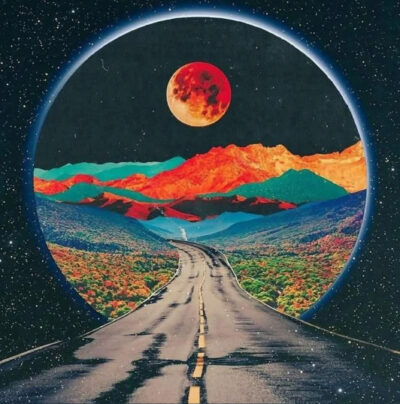
I was nine years old during the Cuban Missile Crisis of October 1962, when the world stood frighteningly close to nuclear war.
At that age, I couldn’t fully comprehend the political tensions between the United States and the Soviet Union, but I was growing up in a country where the possibility of nuclear destruction had become part of everyday life. By the time I reached high school, the Cold War was still very much alive.
I remember being required to watch black-and-white films depicting what would happen if nuclear war broke out. Images of destruction, devastation, and a world reduced to rubble were presented to us as possibilities we needed to understand.
And then came the drills. We were instructed to close the classroom curtains and crawl beneath our desks, presumably to protect ourselves from the unimaginable destruction we had just watched on film. Even then, something about this didn’t make sense to me.
I would raise my hand and ask, “Are we really going to survive this?”
I never received an answer.
And being the rebel I was, I simply remained sitting at my desk. I wasn’t trying to be difficult. I wanted someone to explain how a wooden school desk and a set of classroom curtains were supposed to protect us from a nuclear explosion. If the world was truly coming to an end, I couldn’t imagine that hiding beneath my desk would make much difference. Perhaps that was one of my earliest lessons in questioning fear rather than automatically surrendering to it. I understood that danger existed. I simply wasn’t convinced that following instructions without questioning their purpose made us any safer. And so began my long relationship with predictions of the end of the world.
More than six decades later, I’m still here. And apparently, the world is still ending.
The End Is Near. Again.
Years later, while living in Santa Cruz, California, I would occasionally encounter people standing on street corners holding signs announcing, “THE END IS NEAR.”
I remember smiling, sometimes shaking my head, and continuing on my way. Apparently, the end of the world had been postponed since my school days, but nobody had bothered to announce the new date.
Over the years, I’ve lived through fires, floods, mudslides, the devastating events of September 11, 2001, earthquakes, a global pandemic, and more predictions of impending catastrophe than I could possibly count.
I’ve watched governments threaten one another, economies rise and fall, and entire generations become convinced that civilization was teetering on the edge of collapse. Some of those threats were very real.
The Cuban Missile Crisis brought humanity frighteningly close to nuclear war. Natural disasters destroyed homes and communities. The attacks of September 11 changed our sense of security. COVID changed the world in ways few of us could have imagined.
There was suffering, loss, uncertainty, and fear. But there was also resilience, compassion, recovery, and the remarkable human capacity to adapt. And through it all, life continued.
Not always as we expected. Not always as we hoped. But it continued.
From Cardboard Signs to Social Media
Lately, I’ve noticed a renewed fascination with preparing for the next great catastrophe. Social media is filled with warnings about international conflicts, military preparations, economic instability, and predictions of widespread shortages. Some people are responding by stocking up on camping gear, food, water, medical supplies, and elaborate backup power systems.
And I understand the appeal. There’s something reassuring about believing we can prepare ourselves for whatever might come. But I can’t help smiling at how much things have changed during my lifetime.
When I was young, frightening predictions arrived through black-and-white films shown in classrooms.
Later, they appeared on cardboard signs held by people standing on street corners.
Today, they arrive through social media feeds, videos, headlines, and endless commentary from people who speak with remarkable certainty about events that have not yet occurred.
The technology has changed. The message hasn’t. Something terrible is coming. Be afraid. Prepare.
And whatever you do, keep watching.
Fear has become remarkably easy to distribute, and the more frightening the message, the more attention it often receives.
I sometimes wonder whether we’re becoming so consumed with anticipating the next catastrophe that we’re forgetting to appreciate the extraordinary gift of an ordinary day.
Awareness Is Not Fear
I’ve never considered myself a fear-based person.
That doesn’t mean I’ve been careless, naive, or unaware of the world around me. Quite the opposite.
I’ve always believed in paying attention to my surroundings, recognizing potential dangers, and responding thoughtfully when circumstances require it.
But I have never wanted fear to become the foundation upon which I build my life. There’s a difference between being prepared for life and being afraid of it. For some, preparing for emergencies is practical, reassuring, and even enjoyable. There’s nothing inherently wrong with that. We all find security in different ways. But I wonder about the emotional cost when preparation becomes preoccupation.
When does being ready for tomorrow begin to interfere with enjoying today?
When does awareness become anxiety?
And how much of our precious time are we willing to surrender to events that may never happen?
I learned long ago that worrying about something doesn’t prevent it from happening. It simply allows the possibility of tomorrow’s trouble to occupy today’s peace.
The Things We Cannot Prepare For
At this stage of my life, I’ve come to appreciate something that once might have seemed unsettling.
I don’t know what tomorrow will bring.
And I’m comfortable with that. I’ve lived long enough to understand that life rarely unfolds according to our expectations. Some of the most difficult experiences I’ve faced arrived without warning. No amount of worrying beforehand would have prevented them. And some of the most beautiful moments of my life were equally unexpected. We cannot prepare ourselves for every heartbreak, every disappointment, every illness, or every unexpected turn in the road. Nor can we anticipate every moment of joy, kindness, laughter, or love.
That’s part of what makes life so extraordinary. We spend so much time trying to create certainty in a world that has never promised us any. Perhaps the greater wisdom is learning to live peacefully with uncertainty.
I’ve discovered that peace doesn’t come from knowing everything will be all right. It comes from trusting that whatever happens, I’ll do my best to meet it.
If something happens, I’ll figure it out.
I always have, one way or another. Not necessarily with grace. Not always without tears. And certainly not without moments of uncertainty. But I’ve found my way through.
And I trust that I can continue to do so.
The Freedom That Comes With Age
Perhaps one of the gifts of growing older is recognizing how little time we should waste worrying about circumstances beyond our control. At my age, I’m far more interested in living than in preparing endlessly for the possibility that life might change. I want to enjoy my mornings, my writing, my conversations, the quiet comfort of home, and the companionship of Aspen.
I want to notice the changing seasons, laugh with friends, appreciate small kindnesses, and remain curious about the world. I want to spend my days participating in life rather than rehearsing its possible disasters.
That doesn’t mean I won’t keep reasonable emergency supplies or pay attention to what’s happening around me. It simply means I refuse to let fear occupy more space in my life than it deserves.
Some people find reassurance in carefully constructed emergency plans and well-stocked supplies.
I find mine in something less tangible. A lifetime of experience. The knowledge that uncertainty is survivable.
And the understanding that peace is not something the world must give us. Sometimes, it’s something we choose for ourselves. I don’t need to know what tomorrow holds to appreciate what today offers.
And perhaps that’s the greatest freedom of all.
And Still, the Sun Rises
When I think back to those black-and-white films shown in my high school classroom, I remember the young girl who questioned whether hiding beneath a desk could possibly save her from nuclear destruction.
I can still picture her sitting upright while everyone else crawled beneath their desks. She wasn’t interested in pretending that a classroom curtain could stop a nuclear explosion.
She wanted an honest answer. And when no one could give her one, she chose not to participate in something that made no sense to her. In many ways, I haven’t changed all that much.
I still question frightening predictions. I still prefer reason over panic. And I still believe that life is far too precious to spend waiting for it to end.
When I think about those people standing on the sidewalks of Santa Cruz, I wonder what became of them.
Did they eventually put down their signs?
Did they discover that life was happening all around them while they waited for it to end?
I hope so. Because the world has been ending my whole life. At least, according to someone.
And through all those predictions, there have been sunsets worth watching, friendships worth cherishing, cats and dogs worth loving, stories worth telling, and countless ordinary moments that turned out to be extraordinary simply because I was present to experience them.
Someday, my own journey will come to an end. That’s not a frightening prediction. It’s simply part of being human. But until then, I intend to live. Fully. Gratefully. Curiously.
And with as much laughter as possible.
As for the next predicted apocalypse?
Well, if it happens, I’ll figure it out.
The world may or may not be ending tomorrow.
But today, it’s still here.
And so am I.
And that is more than enough reason to enjoy it.




Leave A Comment
You must be logged in to post a comment.