

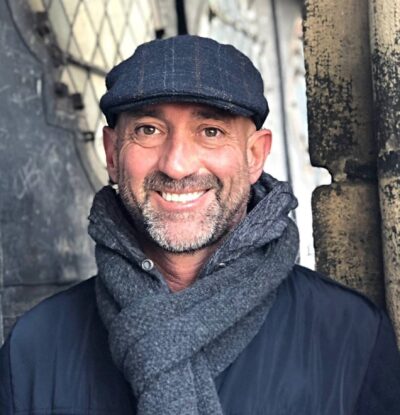
Someone I loved died on November 15, 2025, and since then, life has shifted in ways both visible and unseen.
The quiet carries a different tone now. Everything feels heavier, slower, more deliberate.
Across cultures and faith traditions, there is a long-held recognition of the significance of the days that follow a death.
The forty days, in particular, are understood as a tender span of time—one that holds both grief and healing.
It is often seen as a sacred threshold between holding on and learning how to move forward, a place where ancient wisdom meets the raw immediacy of loss.
When words fail, the forty-day observance offers something else entirely: presence.
A question often arises during this time: when do you begin counting the forty days?
There is no single answer. The timing is shaped by faith, culture, and personal circumstance, each offering its own meaning. Some begin counting from the moment their loved one takes their final breath, honoring the belief that the soul’s journey begins immediately. Catholic and Orthodox Christian traditions often follow this understanding, marking the day of death as the first day. Others begin after a celebration of life, funeral, or burial, allowing space to tend to shock, logistics, and early grief without the added burden of tracking days.
In Islamic tradition, the forty days are typically counted from the date of death, regardless of when the burial occurs. Jewish customs center primarily on the seven-day shiva period, though remembrance may continue beyond that time.
Buddhist practices often align the observance with funeral rites or memorial ceremonies.
What matters most is not precision, but intention. Whether the forty days begin at the moment of death or later, this period offers space for remembrance, prayer, healing, and connection with others who walk beside us in grief. Death rituals across religions reveal a remarkable diversity of belief, reflecting how different cultures understand loss, mourning, and what lies beyond this life.
In many traditions, the fortieth day marks a pivotal moment in the soul’s journey—a time when prayers and rituals are offered to honor the departed and support their passage forward.
I follow Buddhism. In Buddhist tradition, notably Tibetan Buddhism, death is understood as a transition between lives. After death, consciousness is believed to enter a state known as the bardo, a period of preparation for the next rebirth.
While this process traditionally spans forty-nine days rather than forty, the prayers and rituals offered during this time carry the same spiritual weight.
They are meant to guide consciousness with clarity and compassion, supporting a peaceful passage and a favorable rebirth.
To ask what happens to the soul forty days after death is to step into the heart of human longing. Across faiths and cultures, different beliefs rise to meet this question, yet luminous threads of hope bind them together.
Love does not disappear when life ends; it changes its form.
The forty days become a bridge between the raw ache of early grief and the quieter, enduring presence of remembrance. The reverence given to this time reveals something deeply human—our refusal to let love end with a heartbeat.
Death is not a single moment, but a journey. That these traditions have endured across centuries and continents speaks to their quiet, lasting power.
In a world that moves quickly, they offer what nothing else can: time to soften grief, and rituals that bring meaning where words fall short.
As the calendar turns toward a new year, the world seems eager to embrace fresh beginnings and renewed hope. I begin instead with what matters most: my grief belongs to me.
No one else gets to measure its weight or decide when it should soften. Social media fills with resolutions and declarations of fresh starts. Advertisements glow with images of joyful families, making the absence of my beloved friend feel even more pronounced.
What is rarely acknowledged is how difficult this season truly is—grieving through the holidays, or crossing into a new year without someone you love.
There are moments when I feel angry, depleted, numb, or all of it at once.
Ordinary places can undo me—a grocery aisle, a familiar song—and suddenly the tears come.
These reactions are not signs of weakness. They are proof of love. And love does not vanish simply because a body is no longer present. I am not required to feel hopeful right now. I do not need a plan for the year ahead.
I do not owe anyone answers about what comes next. My only responsibility is to move through this season in a way that allows me to keep going—and that is enough.
Grief drains even the simplest tasks of their ease, and Christmas often adds layers of obligation to an already heavy heart. Some days, that looks like ordering groceries for delivery, sitting alone in the quiet, or taking on responsibilities that feel overwhelming simply because no one else is available. The year will continue to move forward. And so will I—carrying my dear friend with me in the choices I make, the memories I hold, and the grace I offer myself as I walk through this painful season.
May Randy’s journey be guided by peace and compassion. May his spirit rest gently, and may the love he shared continue to ripple outward through all who knew him.











Leave A Comment
You must be logged in to post a comment.