

I grew up in a household where we children were given one very clear instruction: what happened inside our home stayed inside our home.
We were never to discuss it with others, much less write about it publicly. Even as a child, I understood there was a reason for the secrecy.
Some of what happened behind those doors was inappropriate; some of it crossed far more serious lines.
My brothers seemed to accept the silence differently. To them, families had secrets. You kept them hidden.
That was simply how the world worked. For many years, I did the same.
Writing about those years now is not an act of revenge. My parents are no longer here, and exposing their faults brings me no satisfaction. I write because silence once convinced me that I was alone. When no one around you speaks about what hurts, it is easy to believe you are the only one hurting. I carried shame about my struggles because everyone else’s lives appeared so normal. Only when I began speaking honestly about my upbringing did I discover how misleading appearances can be. Other people had secrets, too.
Other families had wounds.
Other children had grown into adults carrying things they had never been allowed to name. The details were different, but the loneliness was remarkably familiar.
My brother Rick carried his secrets differently than I did.
He kept almost everything inside. There were things he would share with me that he would tell no one else, not even his wife, Kerry.
He lived with depression, and in 1998, at thirty-seven years old, he died by suicide. I would never claim to know everything that contributed to Rick’s death. Suicide is far too complex for that. But I have often wondered about the burden of everything he carried silently and how lonely it must have been to guard so much of himself from the people who loved him.
The Swiss physician and author Paul Tournier wrote:
“Nothing makes us more lonely than our secrets.”
Those words have stayed with me because I understand them differently now.
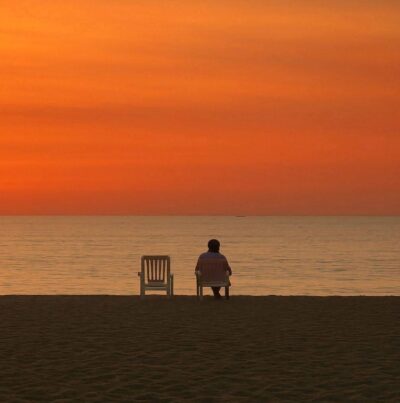
There is a profound difference between being alone and being lonely.
To be alone is simply to be by yourself. Solitude can be peaceful, restorative, even sacred.
Loneliness can happen anywhere. I know because I experienced some of my deepest loneliness while surrounded by people. In high school, I had friends. I could laugh, participate, and appear to belong. Yet much of my inner life remained hidden. No one knew the battles taking place beneath the person they saw. I was surrounded, but I did not feel known.
Perhaps that is one of the loneliest places a person can be.
Whenever we believe we must become someone else to be accepted ~ when we conceal our identity, silence our thoughts, or hide our deepest feelings from those closest to us ~ we create distance between ourselves and the very connection we long for.
Eventually, that distance can feel like a dark cloud passing across the sun. The people are still there. Love may even be there. But we cannot fully feel its warmth because some essential part of us remains hidden.
This is what I am beginning to understand about vulnerability. For much of my life, vulnerability felt dangerous.
Silence felt safer.
Now I see vulnerability differently. It is not the absence of strength. It is one of the ways we find one another.
When I began telling the truth about my life, something unexpected happened. Instead of people turning away, many leaned closer. They recognized pieces of themselves in what I shared.
My story gave them permission to speak about theirs.
And suddenly, neither of us was quite so alone.
This is one reason I continue to write about the things I was once told never to reveal. I am not airing the family’s dirty laundry to punish those who are gone. I am opening the windows.
I want light to reach places that were kept dark for too long. I want the wounds created by silence to have a voice. I want greater transparency in my own life. And I want anyone carrying a secret that has convinced them they are alone to know that human suffering is far more shared than it appears. There is freedom in reaching the point where we no longer require someone else’s approval to inhabit our own lives.
When we become more at peace with who we are, we can allow ourselves to be known ~ not by everyone, and not without discernment, but by those who have earned the right to meet us honestly.
Vulnerability does not guarantee that we will never be judged. It gives us something more important.
The possibility of being truly known.
I heard Wayne Dyer speak several times, and one of the ideas he often expressed has remained with me:
“You cannot be lonely if you like the person you’re alone with.”
I understand those words more deeply today. I can be alone without being abandoned. I can choose solitude without disappearing. And I can speak the truths I once believed had to remain hidden.
Perhaps that is one of the quiet gifts of finally breaking silence:
We discover that our secrets were never proof that we were different.
They were often the very things that could have connected us.






Leave A Comment
You must be logged in to post a comment.